
California window tint law allows any shade on your rear side and back windows, but your front side windows must still let in at least 70% of outside light, and only a narrow strip is allowed at the top of the windshield. At Anocote Wraps, our San Diego shop on Production Ave installs window tinting for cars, trucks and SUVs inside those limits every day, and this guide covers exactly what the Vehicle Code says before you pick a shade.
Where California Tint Laws Come From
The rules live in California Vehicle Code Section 26708. It bans any material on the windshield and side or rear windows, then lists the exceptions that make tint possible.
Most of the confusion online comes from shops repeating rules from other states, where 35% front tint is fine. California legal tint rules are stricter. Here is what actually applies to your car.
Front Side Windows: The 70% Rule
Your two front door windows are the strictest part of California tint laws. The Vehicle Code allows clear, colorless film on these windows only when the film itself has a visible light transmission (VLT) of at least 88%, and the glass and film together still meet the 70% minimum set by Federal Motor Vehicle Safety Standard No. 205.
Here’s the catch. Most factory glass already blocks some light, often landing somewhere between 70% and 85% before any film goes on. That leaves very little room. So in practice, legal tint California drivers can put on the front doors is a very light, nearly clear film, not the 35% or 20% shade you see on cars driving around Mira Mesa.
The law also requires a certificate from the installer, kept in the car, that names the shop and the film manufacturer. Ask for it. A reputable shop hands it to you without being asked.
Rear Side Windows and Back Glass
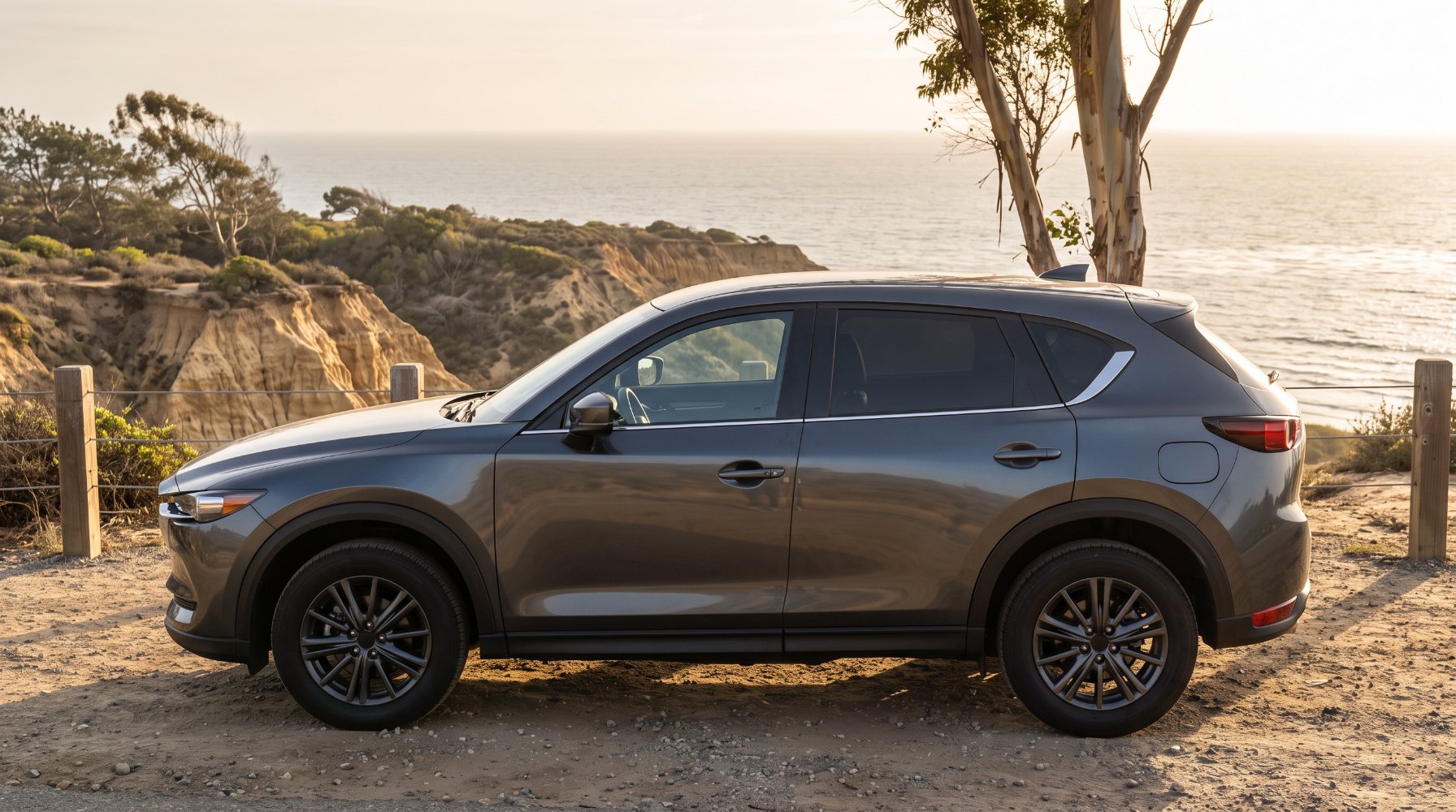
Behind the driver, California is far more relaxed. Side windows to the rear of the driver can be any darkness. The back window can also be any shade, as long as the car has outside mirrors on both the left and right sides that give you a view at least 200 feet behind the vehicle.
Every modern car and SUV has dual side mirrors, so this rarely matters. It does matter for older trucks or project cars missing a passenger mirror. Fix the mirror before you tint the back glass.
This is where most owners get the privacy and heat control they want. A Model Y owner usually pairs a light, legal front film with a darker rear shade that matches the factory privacy glass, so the car looks even from the side. Owners chasing a fully blacked-out profile often add a chrome delete on the window trim at the same visit.
The Windshield: What a Legal Sun Strip Looks Like
You may have heard the “top four inches” rule. That’s not how California window tint law is written. Section 26708(c) allows transparent material on the topmost portion of the windshield as long as its bottom edge sits at least 29 inches above the driver’s seat, measured with the seat all the way back and down.
The strip also cannot be red or amber, cannot carry opaque lettering, and cannot reflect sunlight or headlight glare any more than the bare windshield does. In real terms, a clean, non-reflective strip across the top of the glass cuts the morning glare on the 56 heading west, and that’s what we install.
Medical Exemptions
California does carve out an exemption for drivers and front-seat passengers with a medical or visual condition. A letter signed by a licensed physician and surgeon or a licensed optometrist allows certain sun-screening devices on the front side windows.
Read the fine print, though. The law says those devices cannot be used during darkness. That points to removable screens, not a permanent dark film on the front doors. If you have a medical letter, bring it with you to the estimate and we’ll talk through what actually complies.
What Happens If Your Tint Isn’t Legal
Illegal tint is an equipment violation, and officers often write it as a correctable “fix-it” ticket. That means removing the film, getting the correction signed off, and paying the court’s fees on top of the cost of the original install you’re now peeling off.
Paying twice for tint is a mistake we see a lot. Doing it legally the first time is cheaper, and if you have an old purple or illegal film now, we remove it and clean the glass before the new film goes on.
Not sure where your current tint stands? Get a free estimate with your year, make and model, and we’ll tell you what’s legal on your car.
Choosing a Legal Shade That Still Cuts Heat
Staying inside California window tint law doesn’t mean giving up heat control. A light, high-quality film can reject more heat than a cheap dark one, because heat rejection depends on how the film handles infrared light, not just how much visible light it blocks. That’s why we install Suntek Evolve film, which keeps a legal front door clear while still cutting heat and glare.
UV protection matters here too. Side and rear windows are tempered glass, which the Skin Cancer Foundation notes does not block UVA rays effectively, while quality window film can block more than 99% of UVA and UVB. That’s a real benefit for anyone with a long daily drive up the I-5.
Most of our customers in La Jolla, Del Mar and Carmel Valley tint as part of a bigger protection build. Our car protection packages combine tint with paint protection film and coatings in one visit. If you’re still deciding on the paint side, read our breakdown of PPF vs ceramic coating first.
Frequently Asked Questions
Is 35% tint legal in California?
Not on the front side windows. California requires the glass and film together to pass at least 70% of light, and the film itself must be 88% VLT or lighter. A 35% film is legal on the rear side windows and back glass.
Can I tint my whole windshield in California?
No. Only a transparent, non-reflective strip at the top is allowed, with its bottom edge at least 29 inches above the driver’s seat. Clear, colorless film at 88% VLT or higher has its own separate allowance.
How long does window tinting take?
Most cars are done the same day. Keep the windows rolled up for a few days while the film cures, and we’ll give you exact timing at pickup based on the weather.
Do you tint cars from outside Sorrento Valley?
Yes. Our window tint San Diego customers come from across the county, from La Jolla and Del Mar to Carlsbad and Poway. Check our gallery of recent work or the tint warranty details before you book.
Ready to Get Started?
Send us your year, make and model, and we’ll match a legal front shade and a darker rear shade to your car. Then drop it off at 8745 Production Ave, five minutes from UTC and Torrey Pines.
Get a free estimate or call us at (619) 907-3281.