
PPF vs ceramic coating comes down to one question: do you need to stop rock chips, or do you want gloss and easy washing? Paint protection film is a thick, self-healing layer that physically blocks chips and scratches, while a ceramic coating is a thin, hard layer that repels water and grime but won’t stop a rock. At Anocote Wraps, we install both at our Production Ave shop in San Diego, and most new-car owners we see end up pairing them.
The Short Answer
If you drive the freeway daily or lease your car, start with PPF on the front end. If your car lives in a garage and you mostly want it to stay glossy and easy to wash, a ceramic coating may be all you need.
Most people shopping for PPF San Diego shops are protecting a new car, and for them the right call is both: film where chips happen, coating everywhere else. Here’s how each one works, what it costs you, and how to tell which one your car actually needs.
What Paint Protection Film Actually Stops
PPF is a clear urethane film applied over your paint. It takes the hit so the paint doesn’t. Freeway gravel, road debris, shopping cart bumps and light key scratches land on the film instead of your clear coat.
It’s also thick. The technical data sheet for XPEL Ultimate Plus 10, one of the best-known films on the market, lists a total thickness of 9.6 mil, with a top coat built so light scratches heal over time. That thickness is what absorbs a chip. Heat from the San Diego sun or warm water makes swirl marks fade on their own.
Quality PPF typically lasts up to ten years with proper care. Our paint protection film service covers partial front, full front, track package and full vehicle coverage, plus stealth matte film that turns gloss paint satin.
What a Ceramic Coating Actually Does
A ceramic coating is a liquid that bonds to your paint and cures into a hard, glossy layer. It’s measured in microns, not mils. So it’s far too thin to stop a rock chip, and anyone who tells you otherwise is overselling it.
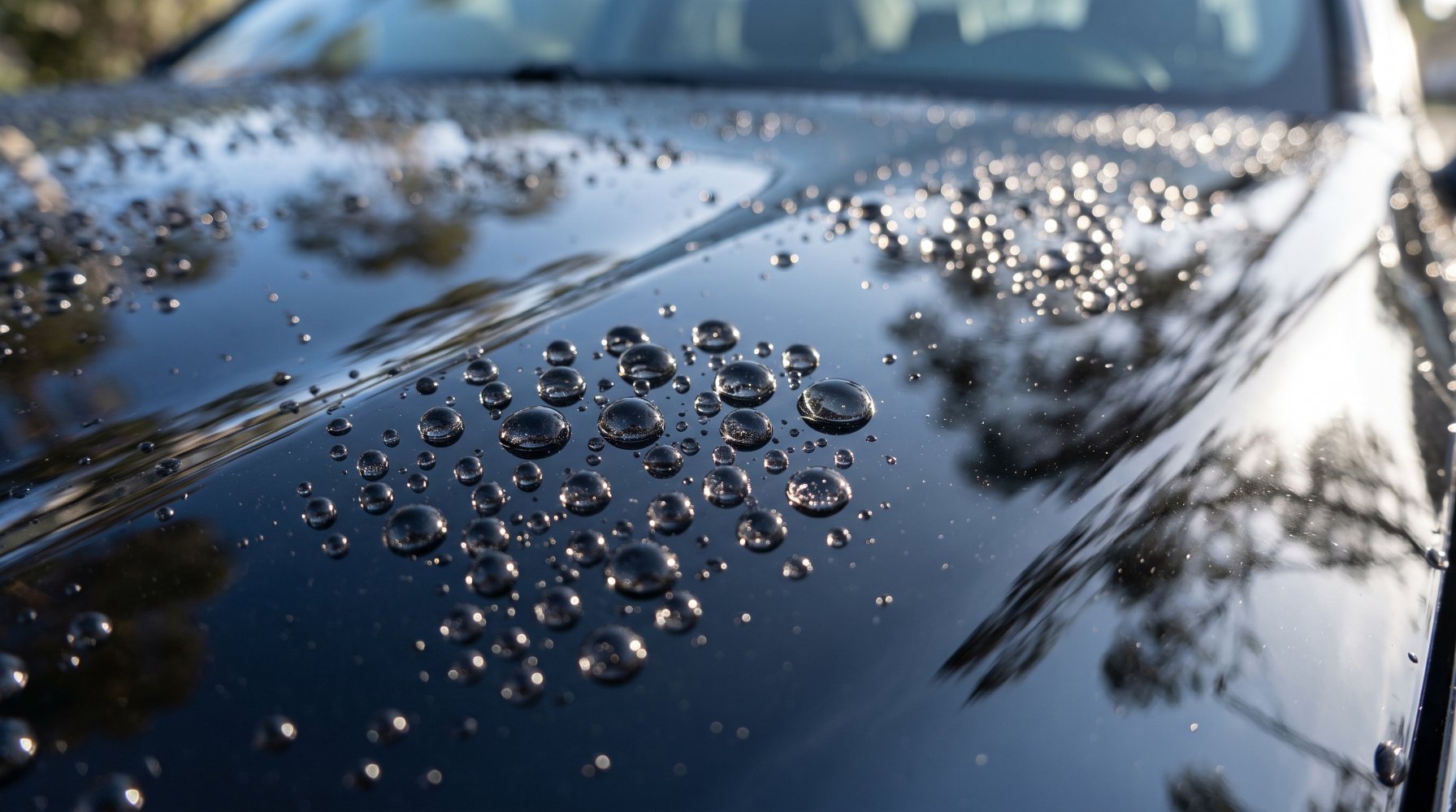
What it does well is chemistry. Water beads and sheets off. Bird droppings, tree sap and bug splatter don’t bite into the clear coat as fast. Dirt releases with a gentle hand wash, and the gloss looks deeper than wax can manage.
Coatings also need correct paint underneath, because a coating locks in whatever is there. That’s why every ceramic coating San Diego job we do starts with decontamination and paint correction. We offer multi-year ceramic coatings and a longer-lasting graphene option rated for ten years.
Ceramic Coating vs PPF: Side by Side
If you’re comparing ceramic coating vs PPF on paper, this is the honest version.
| Paint Protection Film | Ceramic Coating | |
|---|---|---|
| Stops rock chips | Yes | No |
| Self-heals light scratches | Yes, with heat | No |
| Hydrophobic and easier washing | Some films; better with a coating on top | Yes |
| UV and chemical resistance | Yes | Yes |
| Typical lifespan | Up to 10 years | Multi-year, up to 10 with graphene |
| Relative cost | Higher, priced by coverage | Lower, priced by vehicle size and level |
The short version of ceramic coat vs PPF: film protects, coating maintains. That’s the whole PPF vs ceramic coating debate in four words.
Why San Diego Owners Usually Pair Them
Drive the I-5 or the 56 every day and your front bumper takes a beating. Gravel trucks near Miramar, construction on the freeway and wind-blown sand all chip the leading edges first. Film is the only thing that stops that.
The sun is the other half. The U.S. EPA UV Index scale calls a reading of 8 or higher “very high to extreme,” and San Diego gets a lot of clear, sunny days. UV fades paint and trim, and a coating adds a sacrificial layer that takes that exposure.
So the common build is PPF on the front end, where chips happen, and a ceramic coating over the rest of the car and on top of the film. You get impact protection where you need it and easy washing everywhere. Our protection packages are built around that pairing, with legal window tint often added in the same visit.
Pick Your Setup: Which One Fits Your Car
Use your car and your driving to decide. This is where we’d land for most owners:
- Leased car with turn-in fees: full-front PPF. Chips on the hood and bumper are what lease inspections charge for.
- New Tesla, Porsche or BMW driven on the freeway daily: full-front PPF plus a ceramic coating on the rest of the car.
- Garage-kept weekend car: a ceramic coating alone may be enough. Low miles mean fewer chips.
- Dark or soft paint that swirls easily: PPF on high-contact areas, coating everywhere else.
- Exotic, collector car or a fresh delivery you plan to keep: full-vehicle PPF with a coating over the film.
Not every car needs full-body film, and we’ll tell you if yours doesn’t. If you want a cheaper cosmetic upgrade in the same visit, a chrome delete is the usual add-on.
What Affects the Price
PPF is priced by coverage. A partial front costs less than a full front, and full-vehicle coverage is the biggest job. Vehicle complexity matters too, because a bumper with sensors, vents and sharp curves takes longer to wrap cleanly than a flat hood.
Coating price depends on vehicle size, paint condition and coating level. A car that needs a two-step correction costs more than one that comes straight from the dealer. Brand-new cars are the cheapest to protect, since the paint has the fewest defects. Our warranty page explains what’s covered for each product.
Want an exact number for your car? Get a free estimate with your year, make, model and a few photos.
Frequently Asked Questions
Can you put ceramic coating over PPF?
Yes. We use coatings designed for film, which add gloss and make the film easier to clean. It’s the most common combination we install.
Is PPF better than ceramic coating?
In the PPF vs ceramic coating question, film wins for chips and scratches. For water spots, gloss and easy washing, a coating wins. They do different jobs, which is why owners who care about their paint use both.
How much does PPF cost in San Diego?
It depends on coverage and the car. Send your vehicle details through our quote form and we’ll reply with a fixed written price for your exact coverage.
How long will my car be at the shop?
It depends on coverage and how much correction the paint needs. We’ll give you a timeline with your estimate. See our full FAQ page for more on booking.
Ready to Get Started?
Bring your new car in before the first freeway chip, not after. Tell us how you drive and where you park, and we’ll quote the right mix of PPF and ceramic coating at our shop at 8745 Production Ave.
Get a free estimate or call us at (619) 907-3281.